Overview
VoltX is a lightweight, hypermedia based reactive framework for building declarative UIs.
It combines HTML-driven behavior via data-volt-* attributes with signal-based reactivity.
Features
Reactivity
- Signal-based state management with
signal,computed, andeffectprimitives - Predicatable direct DOM updates without virtual DOM diffing
Hypermedia Integration
- Declarative HTTP requests with
data-volt-get,data-volt-post,data-volt-put,data-volt-patch, anddata-volt-delete - Multiple DOM swap strategies for server-rendered HTML fragments/partials
- "Smart" retry with exponential backoff for failed requests
- Automatic form serialization
Plugins
- Built-In
- State persistence across page loads using
localStorage,sessionStorage, orIndexedDB - Scroll management including position restore, scroll-to, scroll-spy, and smooth scrolling
- URL synchronization for query parameters and hash-based routing
- State persistence across page loads using
- Extensibility
- Custom plugin system via
registerPluginfor domain-specific bindings - Global lifecycle hooks for mount, unmount, and binding creation
- Automatic cleanup management
- Custom plugin system via
Design Constraints
- Core runtime under 15 KB gzipped
- Zero dependencies
- No custom build systems
- TypeScript source
- Every feature tested
Concepts
| Concept | Description |
|---|---|
| Signals | Reactive primitives that automatically update DOM bindings when changed. |
| Bindings | data-volt-text, data-volt-html, data-volt-class connect attributes or text to expressions. |
| Actions | data-volt-on-click, data-volt-on-input, etc. attach event handlers declaratively. |
| Streams | data-volt-stream="/events" listens for SSE or WebSocket updates and applies JSON patches. |
| Plugins | Modular extensions (data-volt-persist, data-volt-surge, data-volt-shift, etc.) to enhance the core. |
VoltX.css
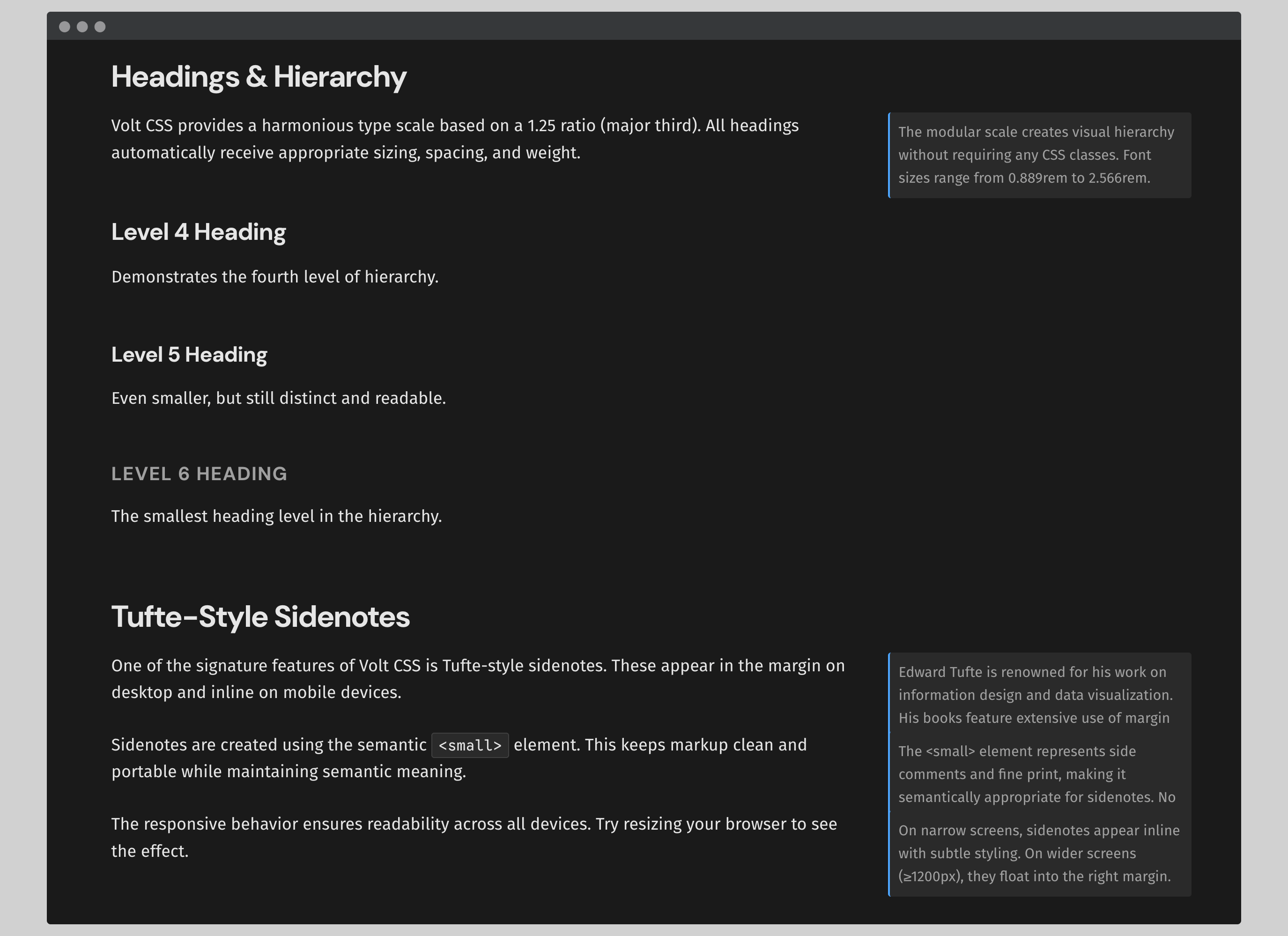
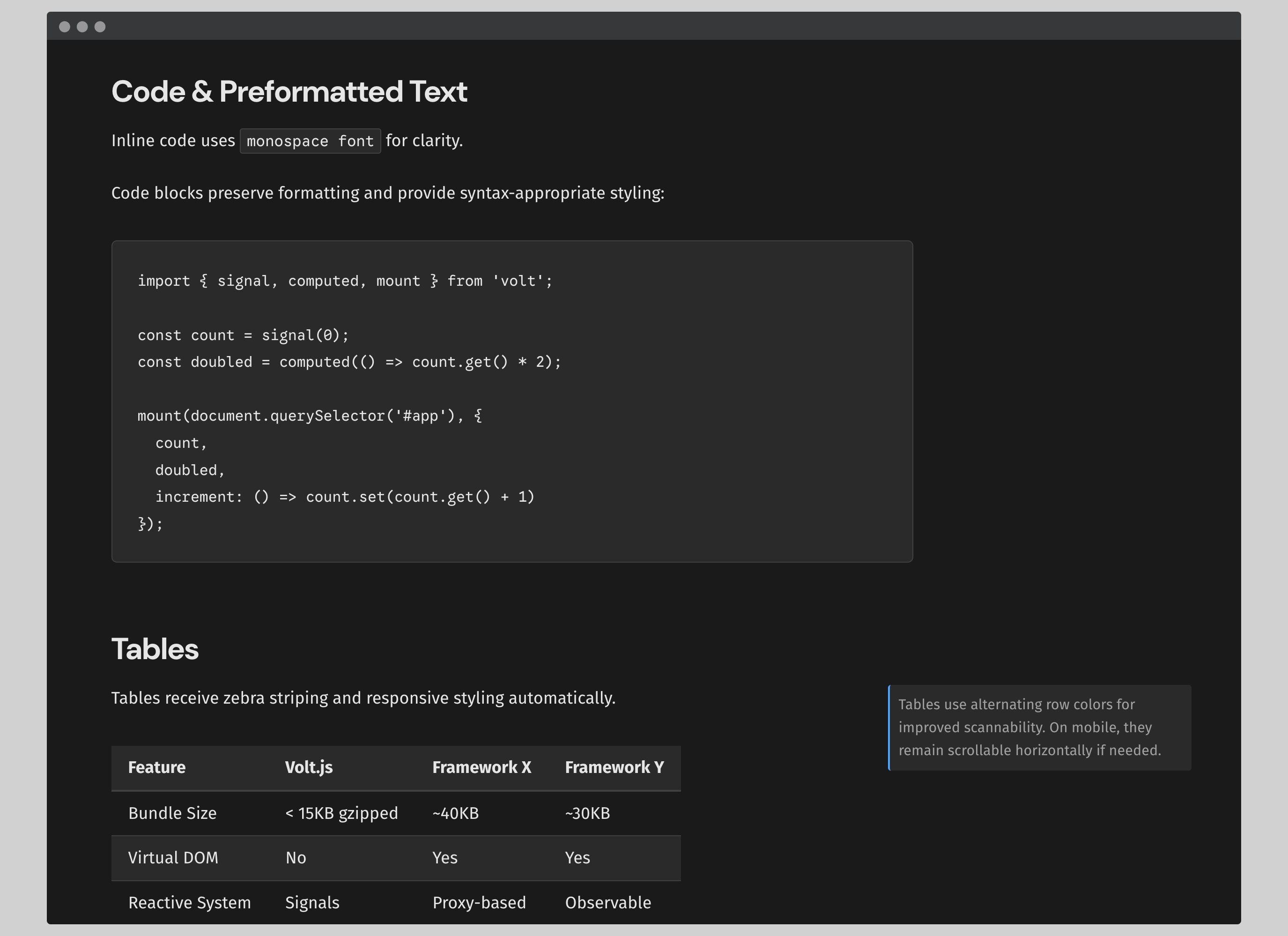
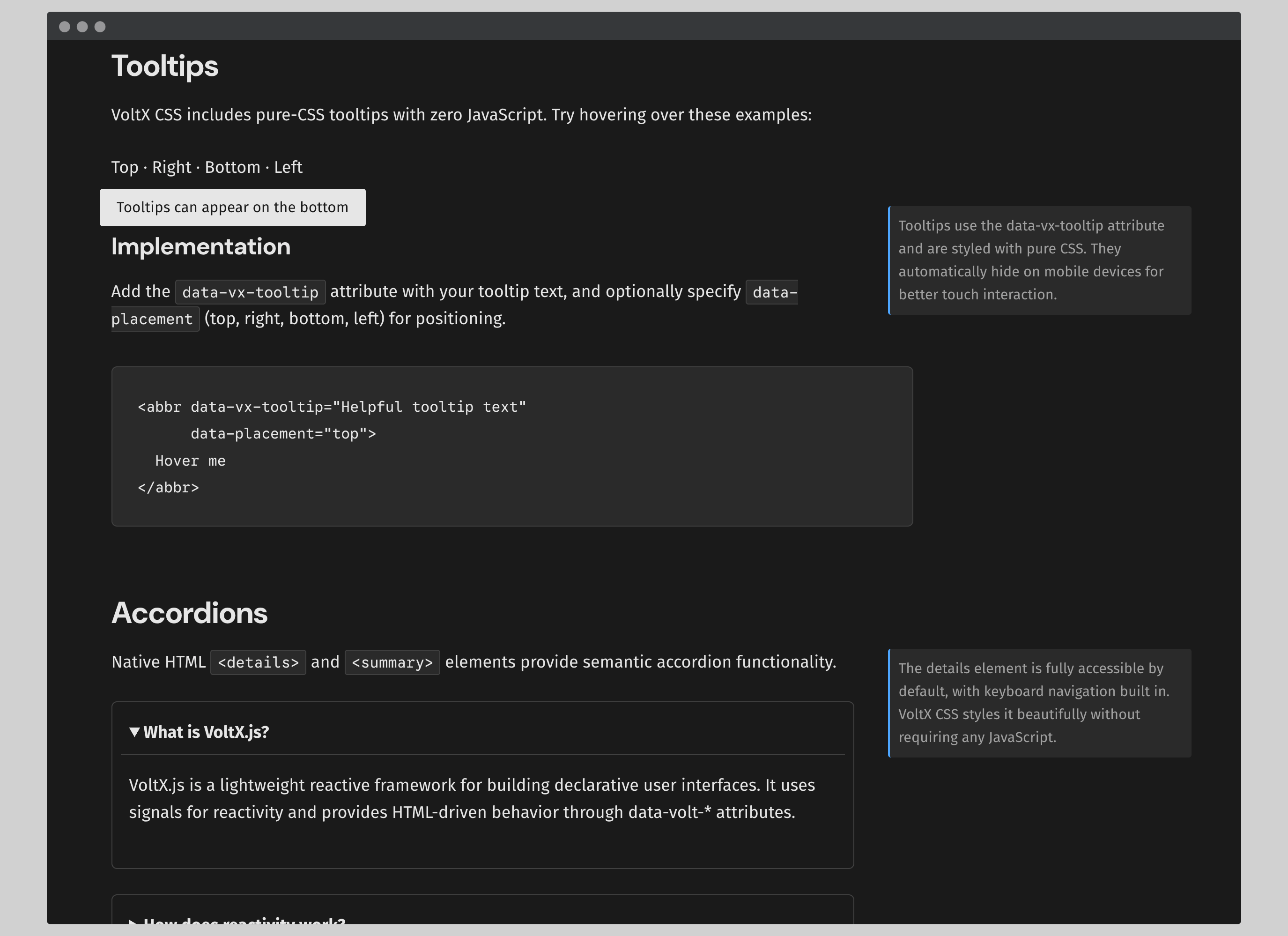
VoltX ships with an optional classless CSS framework inspired by Pico CSS and Tufte CSS. It provides beautiful, semantic styling for HTML elements without requiring any CSS classes—just write semantic markup and it looks great out of the box.
Features include typography with modular scale, Tufte-style sidenotes, styled form elements, dialogs, accordions, tooltips, tables, and more.
Here are some highlights
Browser Support
Modern browsers (Chrome 90+, Firefox 88+, Safari 14+) with support for:
- ES modules
- Proxy objects
- CSS custom properties